Showing all 2 resultsSorted by latest
-
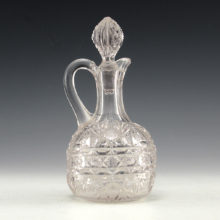
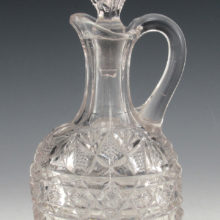
Early American Pressed Glass Zipper Stopper Cruet
Early American pressed glass was made during the Victorian period circa 1850-1910. Hundreds of glass factories in the U.S. produced thousands of patterns in semi-mass production with the help of John Bakewell’s invention of the glass pressing machine.
This 100+ year old cruet stands 6.5″ tall. It is in very good condition with the tiniest of nicks off the top of the original stopper. The nick can’t be seen without a magnifying glass. The glass is clean and clear. The handle was drawn and applied to the cruet.
Slight evidence of natural purpling. In the 1860’s glass makers began substituting lead with manganese. Later it was learned that sunlight would tint the glass purple. After over 100 years of existence, this cruet has revealed a very, very light purpling.
-
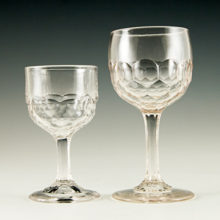
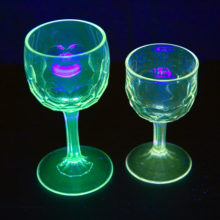
Honeycomb Pattern EAPG Glass Goblet Set of Two from the Mid-1800’s
Interesting pair of 19th Century EAPG glass Honeycomb goblets. The pattern was popular in eateries and taverns during the 1850’s – 1880’s.
Seemingly identical in appearance at first glance, each has subtle differences. The larger has crisp edges on the pattern and a rounded bowl, while the smaller was taken from an older mold and the pattern edges are soft with a non-rounded bowl. Both show traces of two mold lines. The larger goblet has a faint tint of purple, the smaller has not been effected by ultraviolet light and is colorless. Both have medium weight solid rings of bottom-wear. Both light-up under black-light, the smaller reflecting less intensely.The timeless Honeycomb pattern was produced by many glass makers from all over the world. In America, the New England Glass Company is well known for its production in clear flint beginning in the 1950’s. The pattern was so popular that most early glass makers provided a large range or forms in this pattern.
The larger measures 4 7/8″ tall, the smaller is 3 7/8″ tall. The larger has a 10-sided column stem. The smaller’s columns are nearly obscured by the soft mold lines, but there are 10.
Both EAPG glass goblets are in very good condition. The large is near perfect with a few miniscule flea bites on the upper pattern edges. The small goblet has a few more flea bites but the are very tiny. Hard to feel. Must look closely to see. A small trapped air bubble left by the maker resides in the smaller goblet’s foot.