The Glass Alchemy of Murano: How Venice Rewrote the History of Light
For centuries, glass was a thick, muddy material—unreliable, easily shattered, and heavily tinted green or brown by natural impurities. But between the 13th and 17th centuries, on a small cluster of islands in the Venetian lagoon called Murano, Italian masters transformed glassmaking from a crude craft into a highly advanced fusion of material science and fine art.
Through a combination of global trade influences, strict government secrecy, and brilliant empirical chemistry, Murano artisans invented techniques that fundamentally changed how humanity interacted with light, luxury, and science.
The Legacy of the Masters
The inventions of Murano were treated as state secrets because they represented the Silicon Valley level of material science of the Renaissance. While the basic concept of standard glass blowing was practiced globally, the precise chemical recipes, purification protocols, and thermal manipulation techniques belonged uniquely to the Italian lagoon.
Ultimately, Murano’s monopoly was shattered in the late 17th century by a mix of French state-sponsored espionage and the development of heavy lead crystal in Britain. However, the legacy of the Venetian masters remains unassailable: they took a utilitarian substance born in the ancient world and reshaped it into the very definition of modern luxury and clarity.
Today collectors, decorators and gift givers can find Italian glass from the past made or designed by masters of the craft hailing from centuries old glassmaking families. Antique, vintage and retro Italian/Venetian/Murano glass was made the old fashion way; by hand with quality glass ingredients, with form and function in mind, high art decor, and produced by infamous glassmakers still revered today.
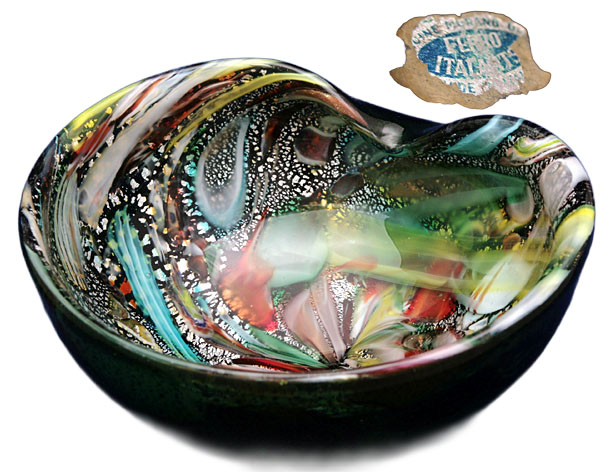
Galliano Ferro murrine mosaic and aventurine cased glass bowl.
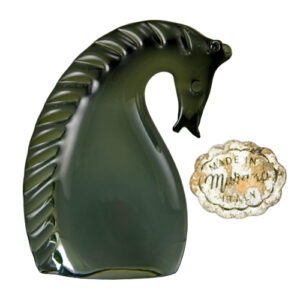
Stylized horse head sculpture with label attributed to Archimede Seguso. Circa 1950's. Smoke black glass with a tinge of dark moss green.