Tiffin Glass (1889–1980)
History & Production:
Tiffin Glass began its long history on August 15, 1889, when A.J. Beatty & Sons relocated from Steubenville to open a new plant in Tiffin, Ohio. In 1892, the factory merged into the United States Glass Company conglomerate and was designated as Factory R. Initially, the plant focused on mass-produced pressed utilitarian tumblers, shifting around 1914 toward refined handblown glassware featuring intricate needle-etched and wheel-cut décor.
By 1927, wares from Factory R were marketed under the “Tiffin Glass” name, and in 1938 the U.S. Glass Company relocated its corporate headquarters directly to Tiffin. In 1940, Tiffin introduced its celebrated Swedish Modern line, showcasing thick, jewel-like colored glass hand-blown and hand-worked into flowing, free-form silhouettes. Following Tiffin’s golden era (1938–1959), the factory changed hands several times—including ownership by its own employees (1963), Continental Can (1966), Interpace (1968), and Towle Silversmiths (1979). During the late 1960s and 1970s, Tiffin produced crystal stemware to coordinate with Franciscan dinnerware (such as Madeira, Cabaret, and Alfresco) alongside heavy molded barware and Renaissance-inspired styles. Tiffin permanently shut down its glassmaking furnaces on May 1, 1980.
Notable Designers, Patterns & Signature Lines:
- C.W. Carlson & The Tiffin Craftsmen: Under company president C.W. Carlson in the late 1930s and 1940s, Tiffin recruited master European-trained glassblowers to pioneer heavy, Scandinavian-inspired free-form art glass.
- Swedish Modern (1940s–1950s): Tiffin’s premier mid-century art glass line, prized for heavy crystal bases, bubble-trapped stems, and rich hues like Copen Blue, Twilight (neodymium alexandrite glass that shifts from lavender to blue), Killarney Green, Wisteria, and Amber.
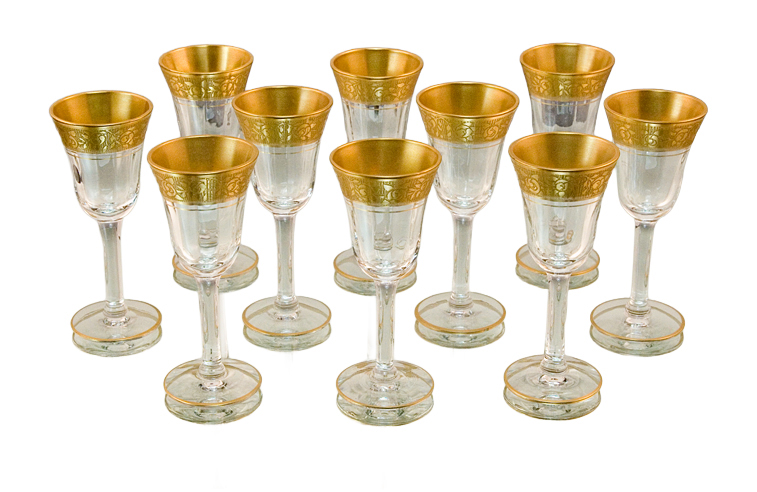
- Classic Etched & Cut Stemware: Tiffin produced thousands of stemware patterns. Iconic needle-etched designs include June Night, Cherokee Rose, Flanders, Persian Pheasant, and Classic, alongside delicate floral cuttings and gold-encrusted rims.
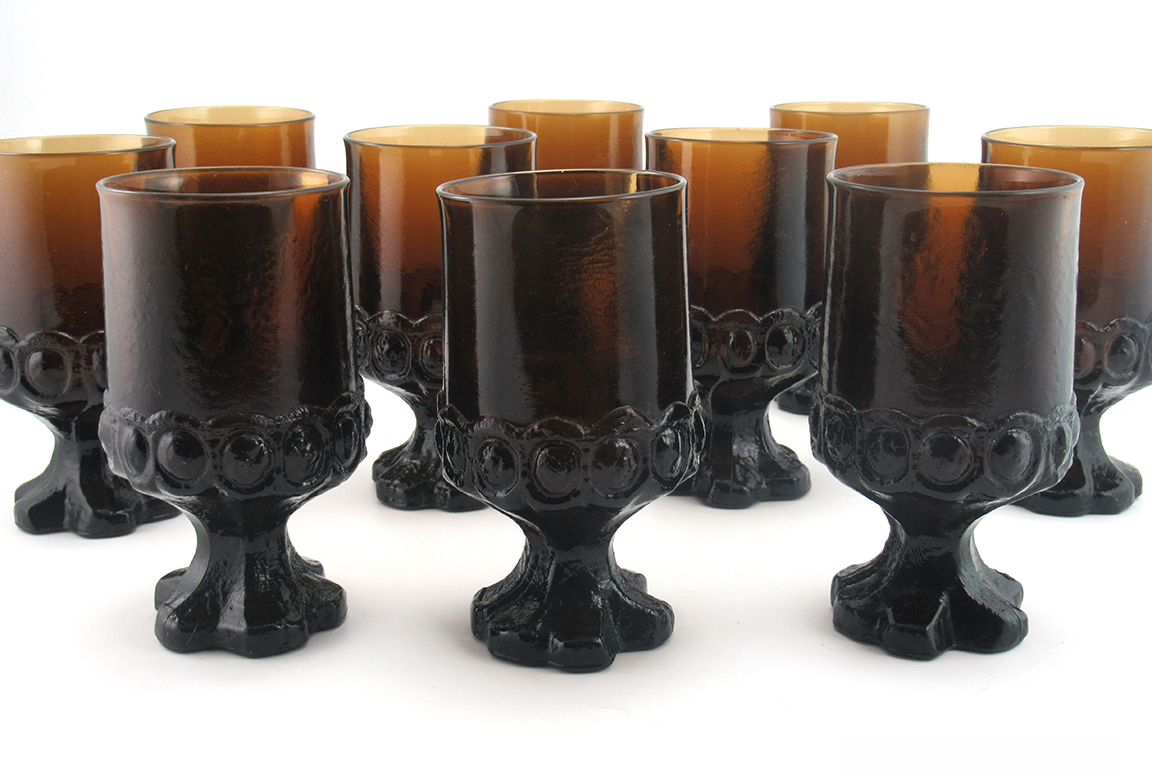
- Franciscan Line (1969–1979): Produced during the Interpace era, this line featured sturdy, everyday pressed barware and stemware designed to pair with Franciscan earthenware and Masterpiece China.
Collector’s Tips & Identification:
- Labels vs. Acid Stamps: Most Tiffin glass was marked with removable gold-and-black foil or paper shield labels. However, some pieces—particularly from the 1930s and 1940s—feature a faint acid-etched Tiffin shield mark on the base, which can often be spotted by holding the glass at an angle under bright light.
- Testing “Twilight” Glass: Tiffin’s famous Twilight color contains neodymium oxide. Under natural sunlight or incandescent bulbs, it glows a warm pinkish-purple, whereas under fluorescent light, it shifts dramatically to a cool ice-blue.
- Quality of Construction: True Tiffin crystal is known for its exceptional clarity, bell-like ring, and fire-polished rims. On Swedish Modern vases and bowls, look for heavy, smoothly ground bottoms and seamlessly applied crystal feet or handles.
- Reference Guides: Because Tiffin produced over 2,700 stemware shapes and patterns, identifying unmarked stems is easiest using authentic vintage catalogs and stemware reference books.