Pilgrim Art Glass (1949–2002)
History & Production:
Pilgrim Glass Corporation was founded in 1949 by Alfred E. Knobler in Huntington, West Virginia, before moving to a larger plant in Ceredo, West Virginia, in 1956. During the mid-20th century, the company produced a wide range of popular handblown decorative glass known for its bold colors, large scale, and crackle finishes.
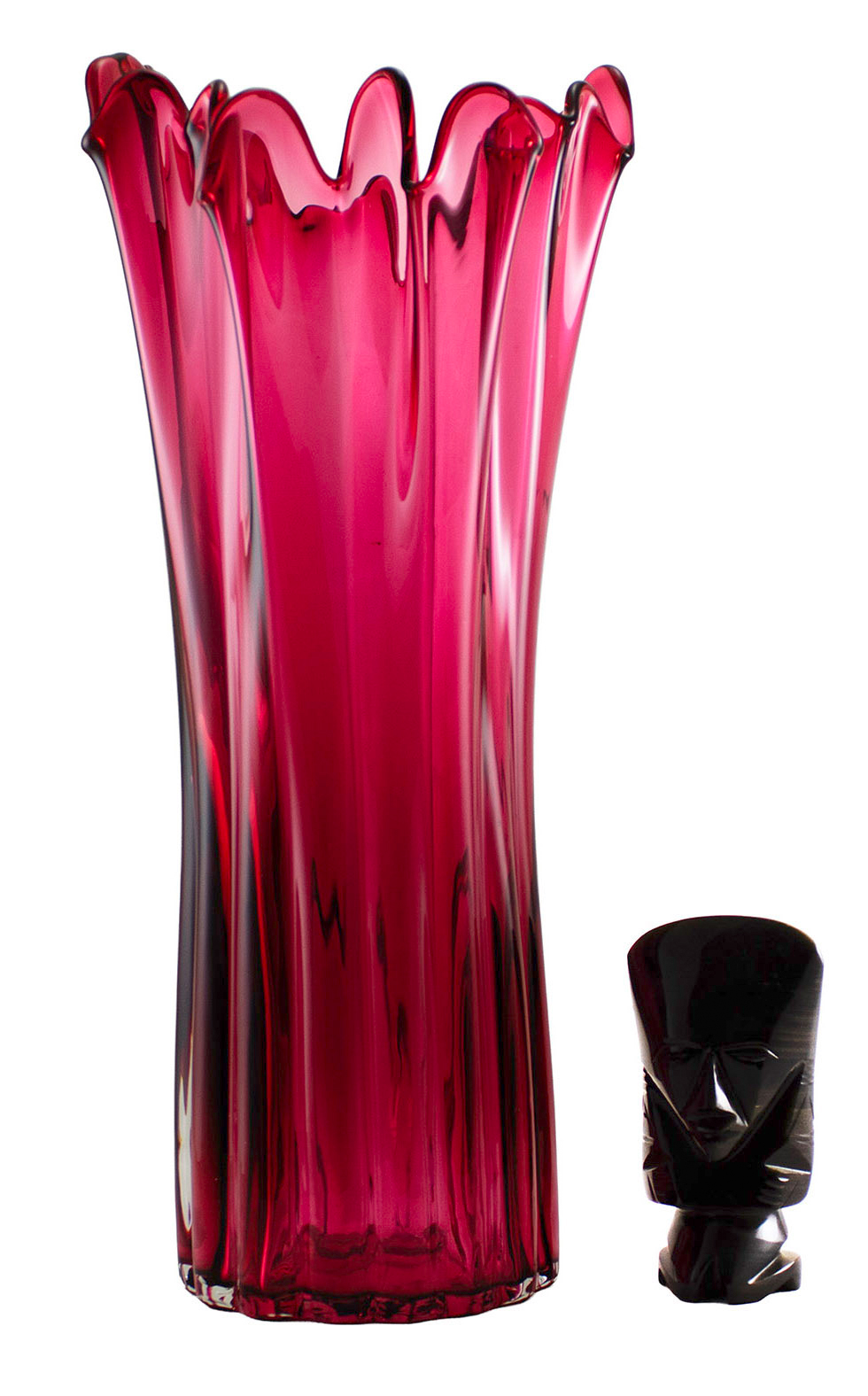
In 1968, Pilgrim introduced gold-ruby cranberry glass and quickly became the largest producer of cranberry glass in the world. Pilgrim Glass officially closed its doors in April 2002 when Alfred Knobler retired without finding a buyer. While the company is no longer in operation, its mid-century cranberry, crackle, and cameo art glass pieces remain widely available on the secondary market and are prized by collectors today.
Notable Designers & Master Glassmakers:
- Alessandro and Roberto Moretti: Two renowned Italian glassblowing brothers who immigrated from Murano in the mid-1950s. They were catalysts to the Mid-century Studio movement. Trained in traditional Venetian off-hand techniques, they launched Pilgrim’s beloved line of solid-glass animal figurines and paperweights.
- Mario Sandon: The Moretti brothers’ brother-in-law, who joined Pilgrim in 1963. He continued designing and crafting glass animals and sculptures for the company until the plant closed in 2002.
- Domhnall Ó Broin: An Irish-born glassmaker who apprenticed at Waterford and designed for Caithness Glass before becoming Pilgrim’s general manager in the late 1960s. He helped oversee the launch of Pilgrim’s iconic cranberry and “Kitchen Chemistry” lines.
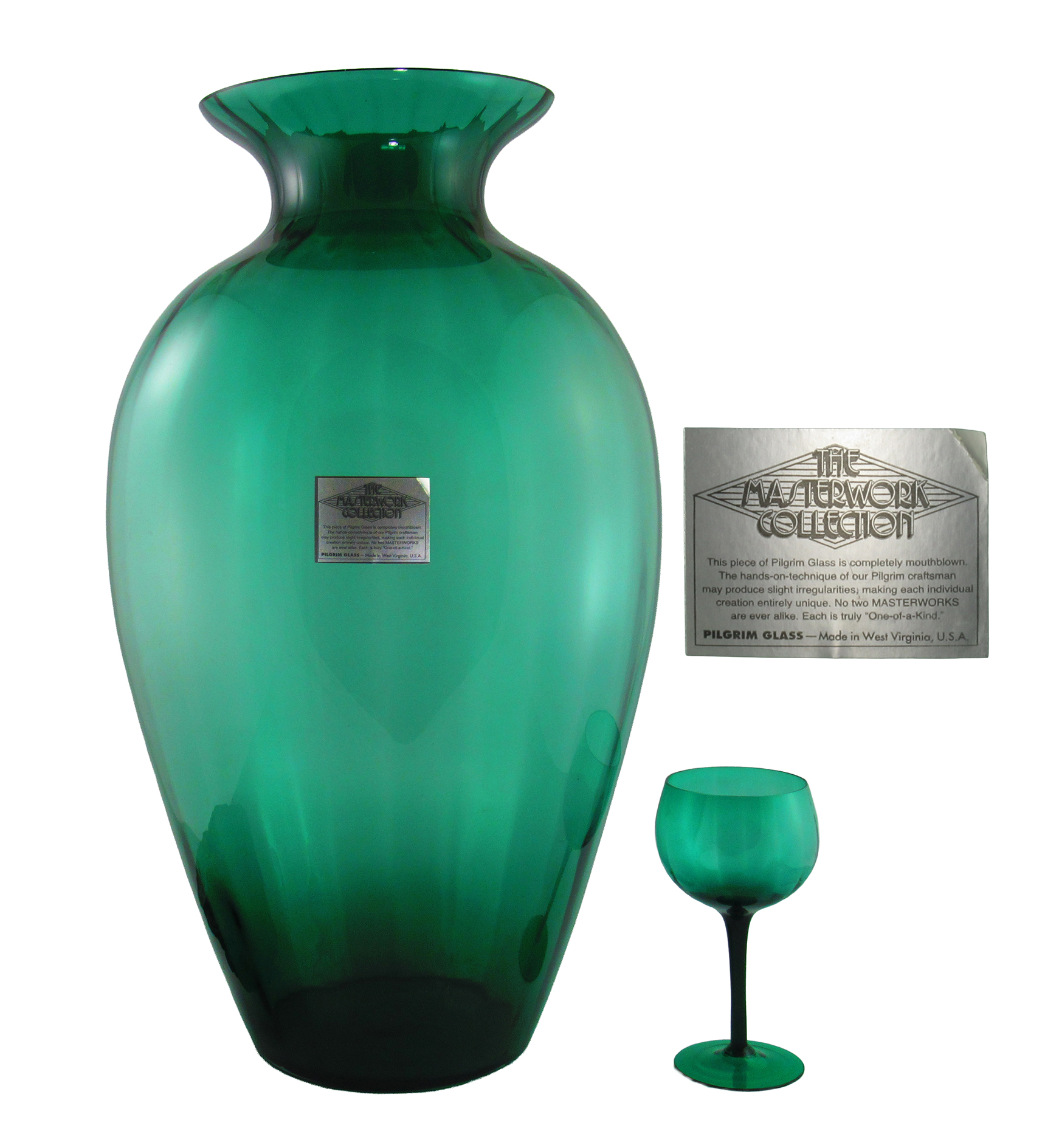
- Kelsey Murphy and Robert Bomkamp: Master glass artists who joined Pilgrim in the mid-1980s. They established the celebrated Pilgrim Masterwork Collection and led the production of multi-layered, sand-carved cameo glass.
Collector’s Tips & Identification:
- Labels vs. Etched Signatures: Most mid-century Pilgrim pieces were marked only with foil or paper stickers (such as the classic black-and-gold or silver-and-blue Pilgrim labels). Because these labels often wash off over time, unmarked pieces must be identified by shape, color, and construction. Later limited-edition Cameo pieces are usually signed and numbered by Kelsey Murphy, and reproductions made from Consolidated or Phoenix molds are etched “Pilgrim Glass” on the base.
- Pontil Marks: As handblown art glass, authentic Pilgrim vessels typically feature a soft or ground pontil scar on the bottom where the piece was detached from the punty rod. Some blown glass was ‘sheared’ at the top, removing the scar completely. Molded and mold-blown pieces normally do not show mold marks.
- Identifying Pilgrim Cranberry Glass: Vintage Pilgrim cranberry glass was made using a traditional formula that added real gold alloy to the glass batch, resulting in some exceptionally deep, dark, and rich cranberry tones. Because of its high quality and classic silhouettes, Pilgrim cranberry glass is frequently mistaken for antique Victorian pieces.
- Catalog Matching: Because West Virginia competitors like Rainbow, Blenko, and Kanawha produced similar forms and colors of glass during the same era, comparing exact dimensions, handle attachments, and silhouettes against vintage Pilgrim catalog reprints is the most reliable way to confirm an attribution.