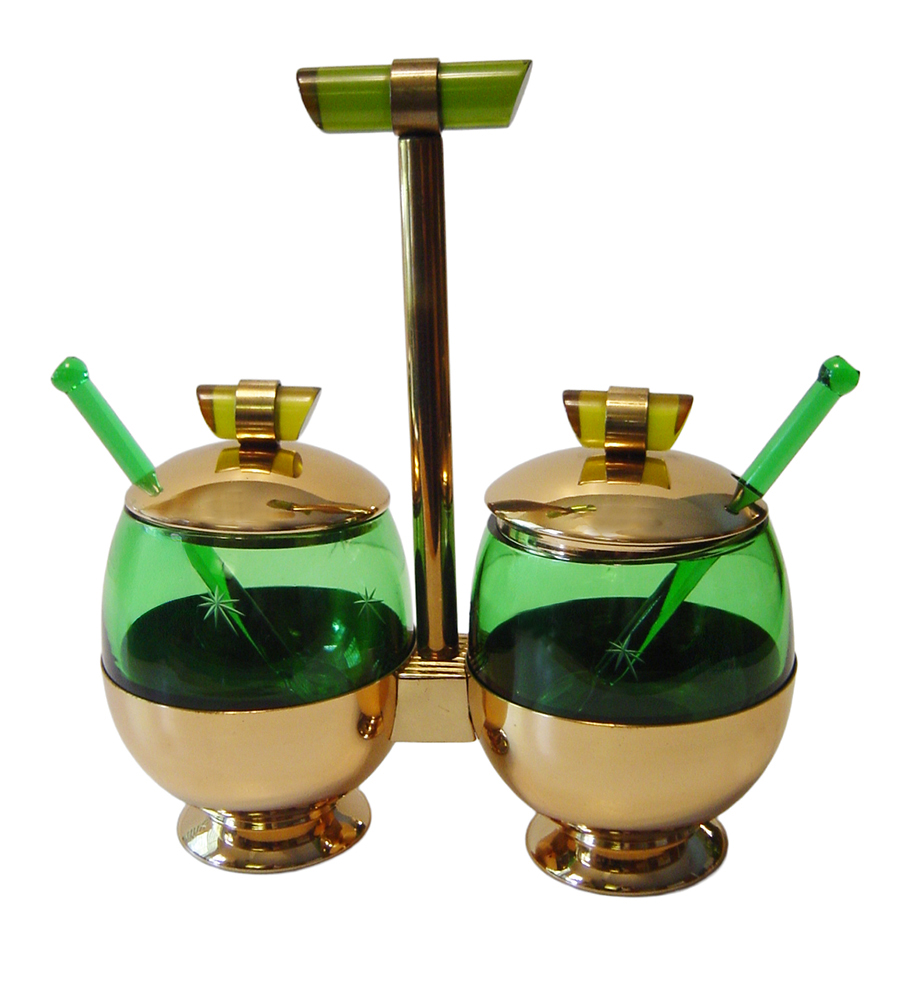
Paden City Glass Manufacturing Company (1916–1951)
The Paden City Glass Manufacturing Company was founded in 1916 in Paden City, West Virginia, by David Fisher, a former manager at New Martinsville Glass. Built along the Ohio River to take advantage of affordable natural gas and river transport, the factory initially produced crystal tableware, lamps, and hotel glassware using moulds acquired from the defunct Higbee Glass Company.
In 1924, Paden City began producing vibrant colored glass and earned a reputation in the industry as “The Color Company”. Under the leadership of David Fisher—and later his son Samuel, who took over in 1933—the factory weathered the Great Depression by creating extensive lines of pressed and blown tableware, stemware, barware, and intricately acid-etched glass. Following the financial strain of purchasing the nearby American Glass Company in 1949 and rising competition from automated glassmakers, Paden City permanently closed its doors in September 1951.
Notable Designers, Mold Makers & Patterns:
- Fredrick “Fritz” Miller & Thomas A. Shaner: Experienced mold makers and glass craftsmen recruited from neighboring West Virginia factories (such as New Martinsville) who helped engineer Paden City’s distinctive Art Deco and Depression-era silhouettes.
- Signature Etchings (“Bird Etches”): Rather than relying on single designers, Paden City became famous for its in-house etching department, which produced over 50 acid-etched patterns. Collectors prize their whimsical bird motifs, including Peacock and Rose, Nora Bird, Lela Bird, and Delilah Bird, alongside floral classics like Ardith and Orchid.
- Iconic Pressed Lines: Key collector lines include Crow’s Foot (also known as Line 412 and Line 890), Penny Line, Georgian, Party Line, and Largo.
Collector’s Tips & Identification:
- No Molded Trademarks: Paden City never embossed or acid-stamped a company logo onto its glass. Pieces were sold strictly with removable paper labels, meaning collectors must identify items by mold shapes, handles, and etching designs.
- Signature Colors: Look for Paden City’s distinctive palette, which spans over 20 shades. Standout colors include Cheriglo (a delicate, bright pink), Emeraldglo (rich green), Mulberry (amethyst-purple), Ebony (opaque black), Copen Blue, Ruby, and Amber.
- Elegant vs. Depression Glass: Paden City straddles the line between mass-produced Depression glass and handmade “Elegant” glass. While their pressed utility lines feel heavier, their blown and acid-etched pieces exhibit crisp detailing, smooth rims, and high clarity.
- Beware of Later Reissues: After the factory closed in 1951, Paden City’s molds and etching plates were sold off to other companies, including Canton Glass, L.G. Wright, and Fenton. Checking reference guides and verify original colors and shapes against later reproductions.