Imperial Glass Company / Corporation (1901–1984)
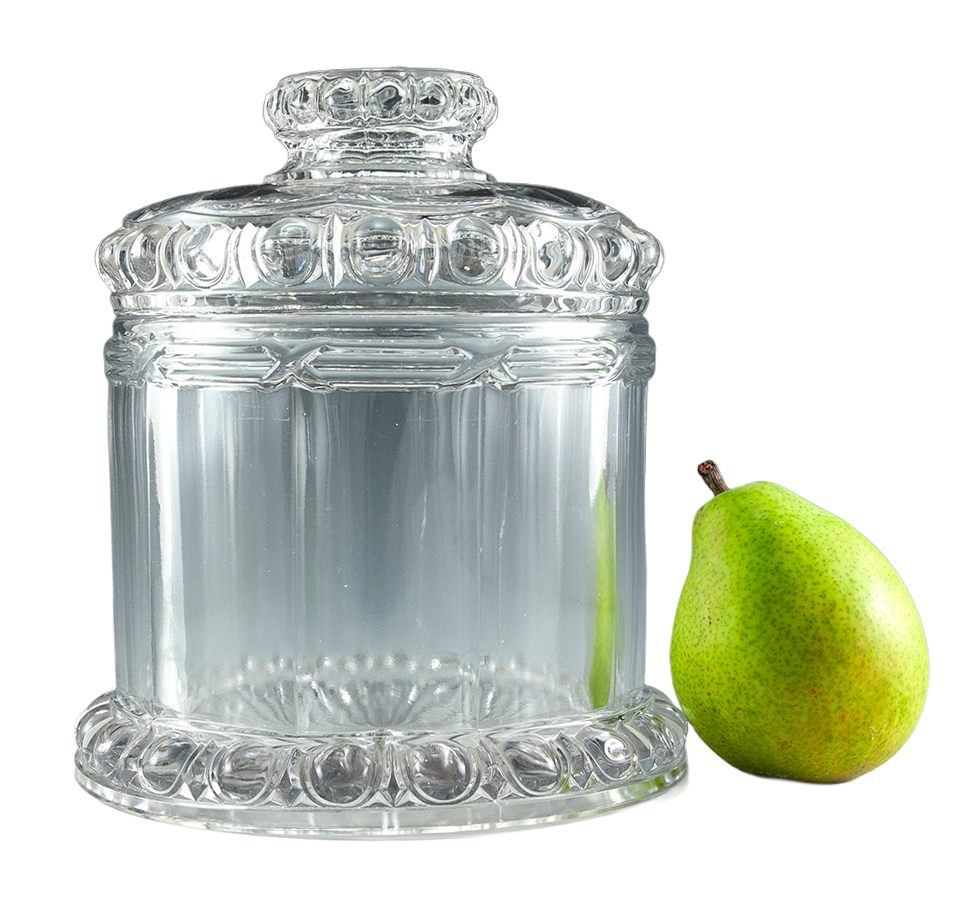
Founded in 1901 in Bellaire, Ohio, by financier Edward Muhleman (with production beginning in 1904), the Imperial Glass Company—affectionately nicknamed “The Big I”—became one of America’s largest and most versatile handmade glassmakers. Over an 80-year span, the factory produced an astonishing range of glassware, transitioning effortlessly from affordable early tableware to intricate art glass and iconic mid-century crystal.
In its first two decades, Imperial scored major hits with imitation cut glass (“Nucut,” introduced in 1911), iridescent Carnival Glass (“Nuart,” introduced in 1912), and free-hand iridescent stretch glass (“Imperial Jewels,” 1916). In the early 1920s, Imperial even brought in former Tiffany glassblowers to create its rare “Free Hand” and “Lead Lustre” art glass vases, which today command top prices among art glass collectors.
After reorganizing through Great Depression bankruptcy in the 1930s, Imperial launched the two crystal lines that cemented its legacy: “Cape Cod” (1931) and “Candlewick” (1936), famous for its delicate beaded edges. Candlewick remained in continuous production until the factory closed and became one of the most widely collected American glassware patterns of the 20th century.
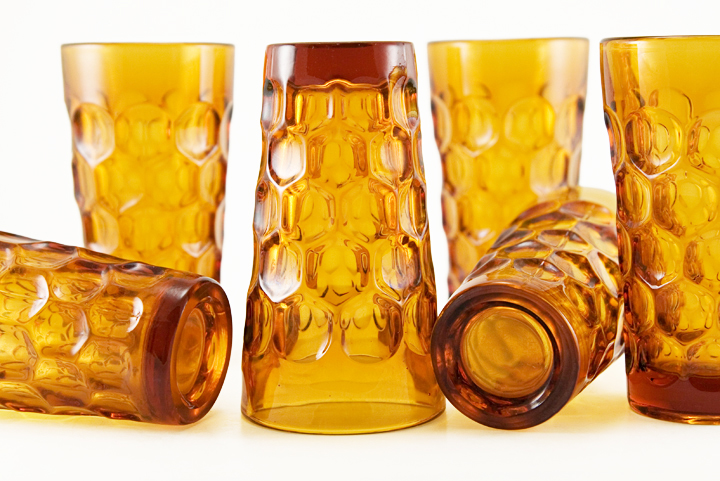
In the late 1950s, Imperial acquired hundreds of original molds from rival Ohio glasshouses Heisey (1958) and Cambridge (1960), reissuing classic animal figurines, slag glass, and milk glass alongside its own designs. Imperial was later purchased by Lenox China in 1972–1973 and passed through private investors in the early 1980s before closing permanently in 1984.
Collector Identification Note: While early Imperial pieces were usually unmarked, Imperial introduced a helpful dating system of overlapping monogram marks starting in 1951:
IG (1951–1972): Standard Imperial production (a capital “G” over an “I”).
LIG (1973–1981): Produced during the Lenox ownership era.
ALIG (1981–1982): Produced under investor Arthur Lorch.