Hazel-Atlas Glass Company (1902–1964)
Formed in 1902 in Washington, Pennsylvania, through the merger of four regional glass and metal firms—including the Hazel Glass Co. (founded in 1885) and the Atlas Glass Co. (founded in 1896)—the Hazel-Atlas Glass Company grew into one of the largest glassware manufacturers in the United States. Headquartered in Wheeling, West Virginia, the company operated more than a dozen factories nationwide, including a massive plant in Clarksburg, West Virginia, that was once the largest tumbler factory in the world.
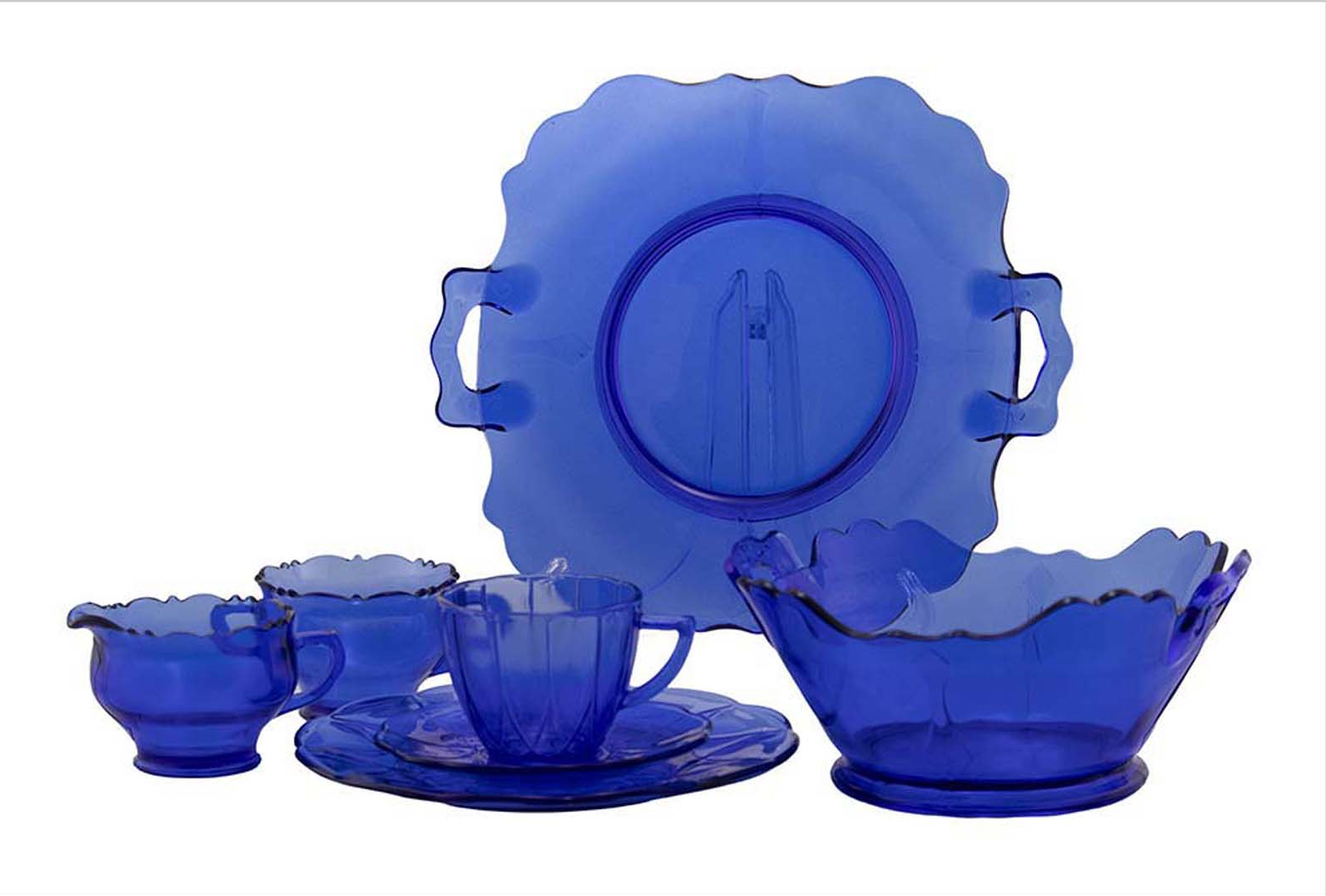
During the 1920s and 1930s, Hazel-Atlas became a household staple by pioneering high-speed automated pressing machines. While it produced millions of commercial bottles, cold-cream jars, and Atlas Mason canning jars, collectors know the company best for its colorful Depression Glass. Beloved patterns such as Royal Lace, Florentine, Moderntone, Cloverleaf, and Newport were sold in five-and-dime stores or given away as promotional premiums in cereal boxes, laundry detergent, and at local movie theaters. Hazel-Atlas produced these lines in vibrant shades of pink, uranium green, cobalt blue, amber, yellow, and crystal.
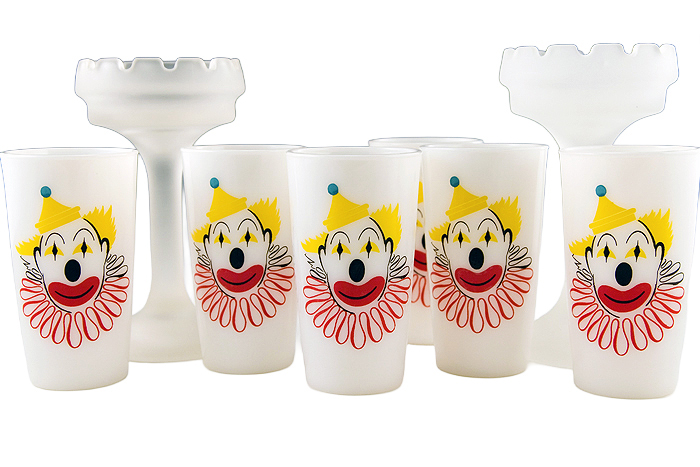
In the late 1930s and through the 1950s, Hazel-Atlas scored another major hit with Platonite—a durable, heat-resistant, translucent-to-opaque white milk glass. Platonite dishes, mixing bowls, and coffee mugs were often sprayed with bright, fired-on colors (like turquoise, vermilion orange, and pastel yellow) or decorated with cheerful mid-century kitchen graphics, including the wildly collectible Dutch/Amish, Gay Fad, and pink elephant cocktail lines.
In 1956–1957, Hazel-Atlas was acquired by the Continental Can Company, sparking a landmark U.S. Supreme Court antitrust battle. By 1964, federal regulators forced the breakup of the division; most of the glass plants were sold to the Brockway Glass Company, marking the end of Hazel-Atlas as an independent glassmaker.
Collector Identification Note: Beginning in 1923, Hazel-Atlas stamped many of its pieces with a distinctive embossed “H over A” monogram (a small capital “A” nestled directly beneath the crossbar of a capital “H”). While many Depression-era dinner plates were left unmarked to keep patterns smooth, you can reliably spot this trademark on the bottoms of mixing bowls, Platonite mugs, tumblers, and canning jars.