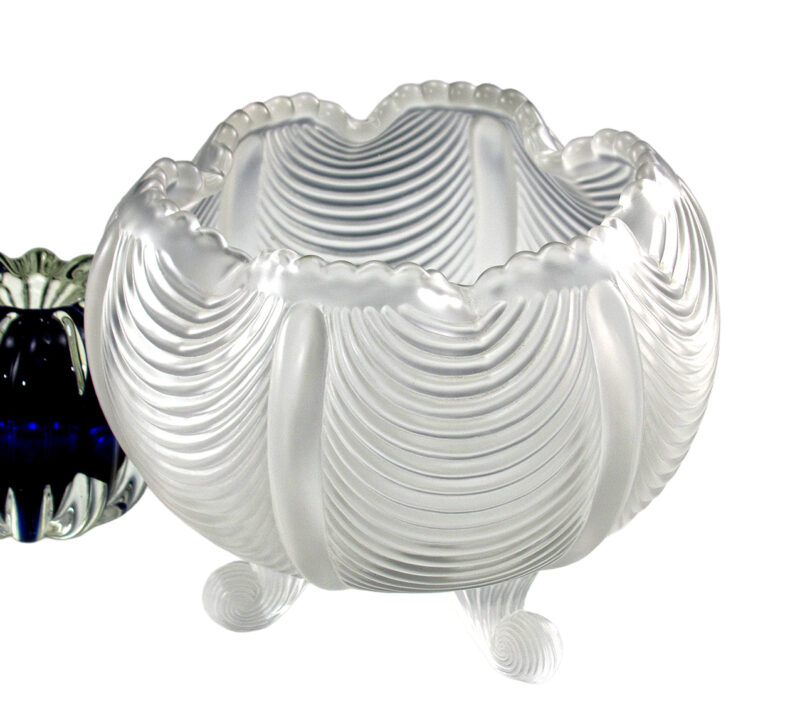
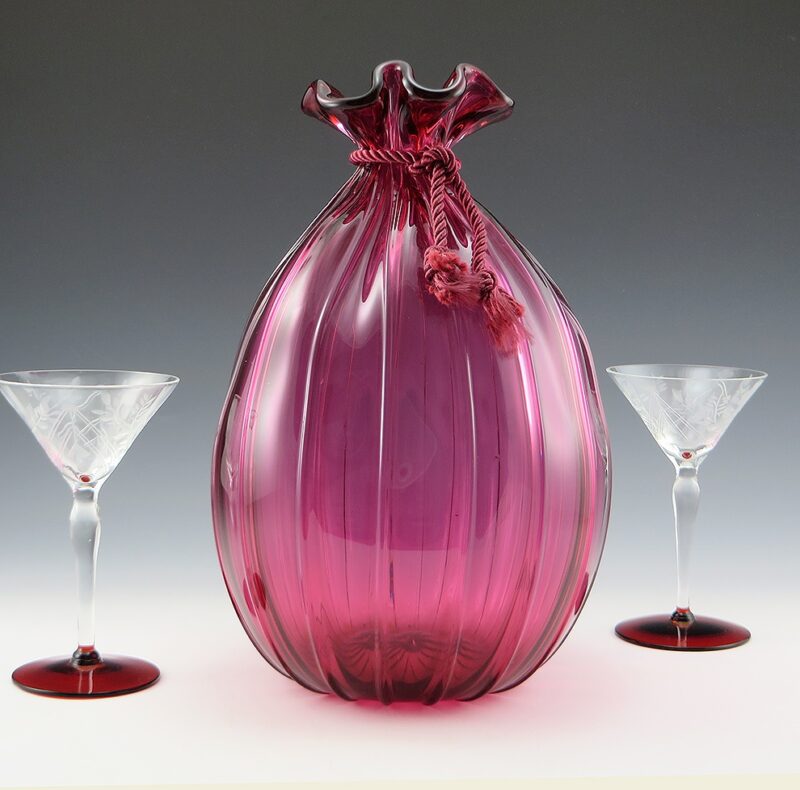
Founded in 1905 by brothers Frank L. Fenton and John W. Fenton in Martins Ferry, Ohio, the Fenton Art Glass Company grew from a modest decorating shop into the premier manufacturer of handmade art glass in the United States. Moving to Williamstown, West Virginia, in 1907, the company spent over a century setting the standard for decorative glass artistry through pioneering color treatments, intricate shapes, and hand-painted detailing.
Company History Summary
- Early Innovations (1905–1920s): Starting by painting glass blanks from other makers, Fenton soon built its own furnace and introduced Carnival Glass in 1907, securing its place as an industry innovator.
- Depression Era Resilience (1930s): While other glass makers collapsed during the Great Depression, Fenton survived by producing utilitarian items, perfume bottles, and popular opalescent glassware.
- Mid-Century Golden Age (1940s–1970s): Fenton debuted its signature Hobnail pattern and expanded into milk glass and “Crest” glassware, becoming a mainstay of post-war American decor.
- Shift to Collectibles & Legacy (1980s–2011): Known for hand-painted floral items and limited-edition artist-signed pieces, Fenton faced stiff foreign competition and changing consumer tastes. Traditional hot-glass production at the West Virginia factory permanently ceased in July 2011.
How to Identify Fenton Pieces
- Pre-1970: Fenton did not mark its glass with a raised logo until 1970; older pieces were identified solely by foil paper labels, which often wore off.
- 1970–Present: In 1970, Fenton introduced an embossed “Fenton” oval logo molded directly onto the bottom of its glass. Numbers were added inside or under the oval in subsequent decades (e.g., an “8” for the 1980s or a “9” for the 1990s) to help collectors date exact production years.