A.F. Bischoff Glass Co. (1922–1963)
Founded by Anthony F. Bischoff in Huntington, West Virginia, in 1922, the A.F. Bischoff Glass Company became one of the region’s most colorful—and frequently misidentified—mid-century art glass makers. After early operations in Huntington and Hurricane, the company settled into its best-known factory in Culloden, West Virginia, where it produced hand-blown decorative glass from 1942 until 1963.
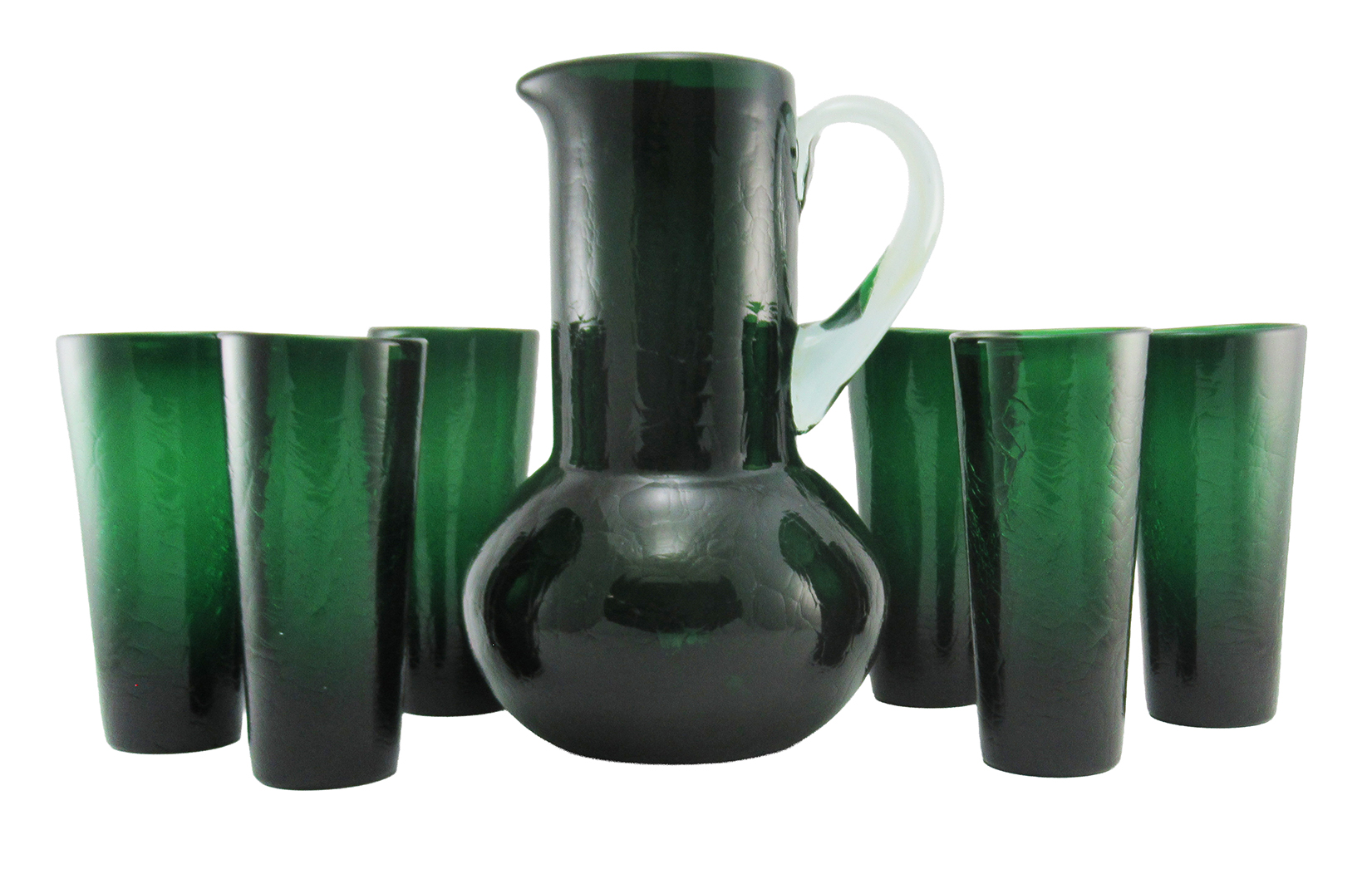
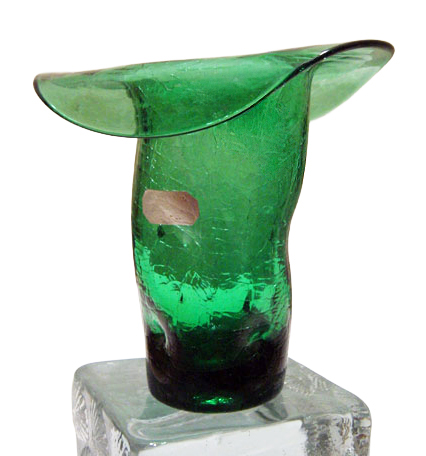
During the 1940s and 1950s, Bischoff specialized in vibrant, free-form tableware and decorative pieces that captured the bold spirit of the Mid-Century Modern era. Popular forms included tall swung vases, optical-ribbed pitchers with applied clear handles, decanters, controlled-bubble bowls, and whimsical crackled or pulled-glass centerpieces. Bischoff worked in a rich palette of saturated colors, most notably Tangerine, Ruby, Amber, Emerald Green, Aqua, Cobalt Blue, and Amethyst.
Competing directly alongside neighboring West Virginia glasshouses like Blenko, Viking, and Pilgrim, Bischoff was well known for keeping pace with market trends—often producing forms closely inspired by Blenko’s popular designs alongside its own quirky, experimental shapes. Because of these stylistic similarities and shared regional glassmakers, Bischoff pieces are routinely mistaken for Blenko on antique shelves today.
In 1963, the company was sold to the Lancaster Colony Corporation, which briefly brought famed former Blenko designer Wayne Husted on board to head design and production. Just a year later, in 1964, the Culloden plant was sold to Chuck Sloan and renamed Sloan Glass, operating until the mid-1980s before several original Bischoff molds were acquired by Indiana Glass for its Indiana Hand Craft line.
Collector Identification Note: Like many West Virginia art glassmakers, Bischoff rarely permanently marked its glass, relying instead on foil paper labels that often washed away over time. Collectors typically identify authentic Bischoff pieces through surviving catalog reprints, distinctive handle attachments, and subtle base characteristics like recessed or ground pontil marks.